Every course built with precision and purpose.
Course Design is where educators build courses, activities, and assessments around clear objectives and connected source materials. Start with existing materials, a supported course-package import, or curriculum already structured in Keystone. Courses adapt, and programs grow from what already exists, so learning reaches learners sooner.
Build around clear objectives.
Choose the objectives a course or program should address. Keystone drafts an initial structure across courses, modules, and lessons for educators to review and adjust.
Bloom’s Taxonomy levels stay visible as educators design, helping activities and assessments reflect the intended depth of learning. Curriculum intent remains connected to the learner-facing design.
Connect each assessment to what it measures.
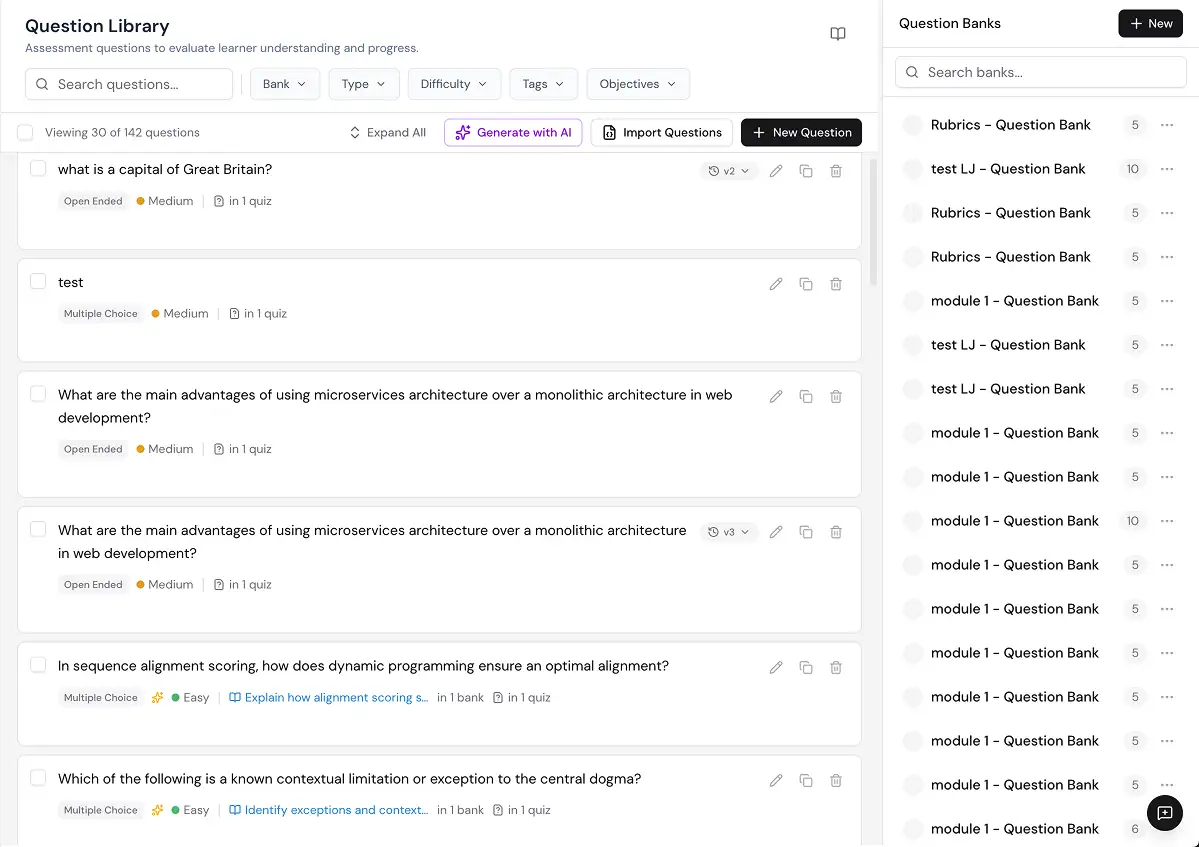
Map assessment questions to learning objectives and keep them in one searchable library. Build standalone assessments or add knowledge checks inside learning activities, and reuse questions across courses and programs.
Bring existing questions in from documents, lists, and other source materials. Filter by difficulty, type, topic, or objective. See whether each assessment measures the knowledge and skills it is meant to.
AI that works from your curriculum.
AI is built into Course Design. It drafts lectures, presentations, and assessments from the objectives and source excerpts educators select. Educators set the focus and, where applicable, the question type and level. They review and approve every draft before it moves forward.
Educators direct the learning decisions. AI helps advance their work.
NEXT: VERSION INSIGHTS →More time to advance learning.
Because courses, activities, and assessments remain tied to the objectives and sources behind them, educators spend less time rebuilding curriculum and more time improving the quality and rigor of what learners experience.